By the Polish School of Cybernetics we mean the body of scientific work that grew out of the writings of Marian Mazur (1909–1983) [Wikipedia: Mazur] and Józef Kossecki (1936–2015) [Commons: Kossecki]: theories of control, information, character and motivation, set out as definitions, theorems and proofs. This page shows what parts the school consists of, where those parts come from and how they depend on one another.
The first codification
The name of the school is older than any description of it. Mazur himself put the word ‘school’ in quotation marks and applied it to camps in which each side defends its own single truth [Mazur 1976, p. 36]. Kossecki called him the principal founder of the ‘Polish cybernetic school’ [Kossecki 2018, pp. 5–6]; the literature on Mazur uses several variants of the name [Pawlak 2020]. Until now the school has lived mainly as a stereotype: a set of repeated sayings of both authors, with no list of the theories that belong to it and no account of how they depend on one another.
The author of this project is undertaking the first codification of the Polish School of Cybernetics: listing its components, setting out their order and giving a source for every statement. The arrangement described below is therefore a proposal of the project, not an inherited division.
Where it comes from: logic
The school grows out of logic. Its groundwork is the work of the Lwów–Warsaw School, and on this page above all the logic of Kazimierz Ajdukiewicz (1890–1963), who shared many of that school's views [Wikipedia: Ajdukiewicz]. From this tradition come the three cornerstones we use:
- defining — Ajdukiewicz distinguished a definition that explains the meaning of a word from one that characterises an object unambiguously [Ajdukiewicz 1975, p. 62]; definitions that are true by virtue of an adopted terminological convention he called projecting definitions (definicje projektujące) [Ajdukiewicz 1958, p. 35];
- deduction — ‘We call an inference deductive if its conclusion follows logically from its premises’ [Ajdukiewicz 1958, p. 160];
- realism — Ajdukiewicz abandoned the radical conventionalism that made our picture of the world depend on the choice of a conceptual apparatus; from that turning point, as he wrote himself, almost all his philosophical works were directed against idealism [Ajdukiewicz 1985, pp. 176, 186].
The core: Mazur
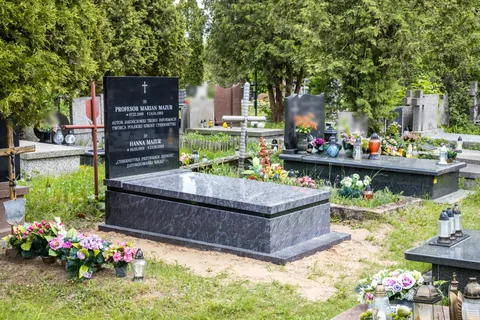
The core of the school consists of three of Mazur's theories: the theory of układy samodzielne (literally ‘self-reliant systems’), that is, autonomous systems (the book of 1966), qualitative information theory (1970) and the theory of character (1976) [Wikipedia: Mazur]. Mazur placed cybernetics between the abstract sciences, that is, mathematics and logic, and the particular sciences; he called it ‘the most general concrete science’ [Mazur 1976, pp. 14–15].
Mazur's information theory is a physical theory. Its basic concept, the message, is in his definition ‘a physical state differing in a defined way from another physical state within a control path’ [Mazur 1970, p. 34], and information is the transformation of one message into another. The theory therefore does not go beyond the physical world. Mazur set it apart from Shannon's theory, which measures information by the probabilities of events, although in many situations no set of such events can be identified at all [Mazur 1970, p. 17].
Generalisation and the return to logic: Kossecki
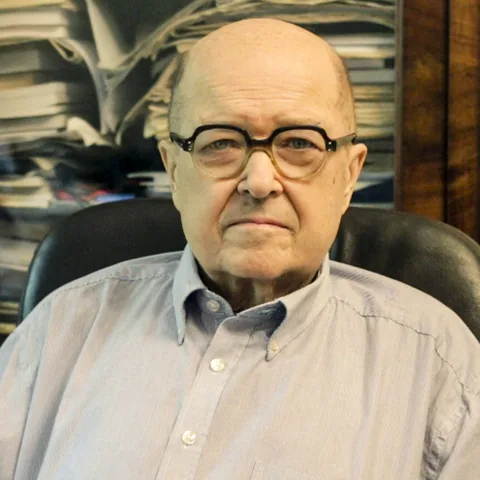
Kossecki observed that Mazur's concept of information ‘concerns only physical processes’ [Kossecki 2018, p. 14] and built a general qualitative information theory (ogólna jakościowa teoria informacji) whose concepts cover both physical and abstract objects [Kossecki 2018, p. 15]. He described his contribution as a generalisation of Mazur's theory [Kossecki 2018, pp. 5–6]; in a lecture he compared the relation between the two theories to that between mathematics and physics [Kossecki 2014b, 1:11:07].
Kossecki starts not from physical states but from primitive concepts, among them set and relation [Kossecki 2018, pp. 21–22]. He calls information a relation between the elements of one set, and a code a relation between the elements of two different sets [Kossecki 2018, p. 31]. The approach cuts across disciplines: it applies to any field in which sets and relations can be identified. Kossecki places set theory on the borderline between his information theory and logic [Kossecki 2018, p. 60].
From general qualitative information theory and the axiomatic theory of cognition Kossecki built axiomatic-informational logic (logika aksjomatyczno-informacyjna). It differs from traditional logic in assigning truth not to sentences but to items of information, ‘which are relations between sentences’ [Kossecki 2018, p. 38]. Kossecki traced the principle of building this theory on as few primitive concepts and axioms as possible to Jan Łukasiewicz, a co-founder of the Lwów–Warsaw School [Kossecki 2018, p. 21]. In this way the school, which came out of logic, returns to logic — with the apparatus of information theory. The school's information theory thus includes Mazur's theory, rooted in cybernetics and physics, and goes beyond it towards mathematics and logic.
Kossecki also developed social cybernetics, based on Mazur's theory of autonomous systems; according to a 2020 article, he introduced it into the curriculum at the University of Warsaw and at the Wyższa Szkoła Pedagogiczna (Higher School of Education) in Kielce [Pawlak 2020]. He distinguished six kinds of social norms — from vital and economic through legal and ethical to ideological and cognitive [Kossecki 2018, pp. 79–80].
Beside the core: the science of civilisations and the theory of motivation
The science of civilisations was created by Feliks Koneczny (1862–1949) [Wikipedia: Koneczny]. He defined civilisation as ‘a method of organising collective life’ [Koneczny 1935, p. 154]; he derived his principles from historical experience, that is, inductively [Koneczny 1935, p. 139], and called the whole science a higher storey of history [Koneczny 1935, p. 316]. Kossecki adopted its terminology: he presented his concept of a social control system as a cybernetic generalisation of Koneczny's concept of civilisation [Kossecki 2018, p. 152].
The science of civilisations is an empirical science, so it does not belong to the deductive core of the school. It can, however, be synthesised and translated into the language of cybernetics. This is the purpose of the general theory of motivation on which the author of the project is working in the lecture series ‘Cywilizacje, kultury, motywacje’ (‘Civilisations, Cultures, Motivations’): it is meant to bind Mazur's theory of motivation together with Kossecki's theory of norms and motivation and to provide a starting point for further discoveries [CKM lectures, parts 6, 8]. The work is in progress.
Method and ethos: check for yourselves
Mazur demanded proof from a theory: observation could test a theory, but could not be a link in its proof [Lechowski 1987]. In a conversation in 1973 he said: ‘After all, the correctness of the answer found is decided not by the right to decide, but by carrying out a proof’ [Mikke 1973]. In Cybernetyka i charakter (‘Cybernetics and Character’) he added that ‘where there is faith, there is no science’ [Mazur 1976, p. 42].
Kossecki passed this attitude on in a sentence he attributed to Mazur: ‘and where authorities begin, science ends and philosophy begins’ [Kossecki 2018, p. 17]. Following Mazur, he divided cognition into art, in which there are neither theorems nor proofs; philosophy, in which there are theorems without proofs; and science, in which there are both theorems and proofs [Kossecki 2018, pp. 16–17]. He advised his listeners: ‘Ask for the definition and ask for the proofs’ [Kossecki 2014c, 39:21]. After his death, a circle of his listeners placed these words — ‘ask for the definition, ask for the proofs’ — on his funeral wreath [Account of the project's author].
In his lectures Kossecki also repeated many times that his words should not be taken on trust but checked: ‘please check it, don't believe me’ [Kossecki 2014a, 10:51].
Asking for theorems and proofs, checking rather than believing — this is the ethos of the school and the principle of this project. That is why every definition in the dictionary is given with its work and page, and the graph shows which concepts each entry rests on.
Components of the school
- Axiomatic-informational logic (Kossecki) — in preparation for the dictionary.
- General qualitative information theory (Kossecki), which includes Mazur's qualitative information theory — the dictionary has 135 entries of Mazur's theory, among them information, message, transformation.
- Theory of self-reliant (autonomous) systems (Mazur) — cybernetics, 59 entries, among them autonomous system, control, homeostat, correlator.
- Theory of character (Mazur) — theory of character, 115 entries, among them character, character dynamism, motivation.
- General theory of motivation (the author of the project) — in progress.
Beside the components:
- the science of civilisations — Koneczny's legacy, adopted by Kossecki; not in the dictionary in this version;
- the Lwów–Warsaw School — the logical groundwork, represented in the dictionary by Ajdukiewicz's logic (in preparation).
The dictionary now contains 309 entries with 313 definitions by Mazur, each with its work and page.
Main works
| Year | Title | Author | Publisher | Source |
|---|---|---|---|---|
| 1958 | Zarys logiki (‘An Outline of Logic’) | Kazimierz Ajdukiewicz | PZWS | [Ajdukiewicz 1958] |
| 1966 | Cybernetyczna teoria układów samodzielnych (‘A Cybernetic Theory of Autonomous Systems’) | Marian Mazur | PWN | [Wikipedia: Mazur] |
| 1970 | Jakościowa teoria informacji (‘A Qualitative Theory of Information’) | Marian Mazur | WNT | [Wikipedia: Mazur] |
| 1974 | Cybernetyka kultury (‘Cybernetics of Culture’) | Józef Kossecki | PIW | [Catalogue 2026] |
| 1975 | Cybernetyka społeczna (‘Social Cybernetics’) | Józef Kossecki | PWN | [Catalogue 2026] |
| 1976 | Cybernetyka i charakter (‘Cybernetics and Character’) | Marian Mazur | PIW | [Wikipedia: Mazur] |
| 2018 | Metacybernetyka (‘Metacybernetics’, corrected edition) | Józef Kossecki | — | [Kossecki 2018] |
Sources
Quotations from Polish sources are given in our own translation.
- [Ajdukiewicz 1958] K. Ajdukiewicz, Zarys logiki (‘An Outline of Logic’), PZWS, Warsaw 1958.
- [Ajdukiewicz 1975] K. Ajdukiewicz, Logika pragmatyczna (‘Pragmatic Logic’), PWN, Warsaw 1975.
- [Ajdukiewicz 1985] K. Ajdukiewicz, Język i poznanie (‘Language and Cognition’), vol. II: Wybór pism z lat 1945–1963 (‘Selected Writings 1945–1963’), 2nd edition, PWN, Warsaw 1985 (reply to a 1953 polemic, pp. 176 and 186).
- [Commons: Kossecki] photograph of Józef Kossecki's grave (plaque with the years 1936–2015), Wikimedia Commons, taken 22.10.2021, accessed 14.10.2026.
- [CKM lectures] ‘Cywilizacje, kultury, motywacje’ (‘Civilisations, Cultures, Motivations’) — a lecture series by the author of the project, 12 parts, 2022–2023; part 6 ‘Teoria norm i motywacji Józefa Kosseckiego’ (‘Józef Kossecki's Theory of Norms and Motivation’), part 8 ‘Ogólna teoria motywacji II’ (‘General Theory of Motivation II’) (video recordings).
- [Catalogue 2026] Catalogue of the works digitised in the project (2026).
- [Koneczny 1935] F. Koneczny, O wielości cywilizacyj (‘On the Plurality of Civilisations’), Kraków 1935.
- [Kossecki 2014a] J. Kossecki, lecture ‘Dziedziny ludzkiego poznania wg Mariana Mazura’ (‘The Domains of Human Cognition according to Marian Mazur’), series ‘Społeczne procesy poznawcze’ (‘Social Cognitive Processes’), part 2, 2014 (video recording; time in the recording).
- [Kossecki 2014b] J. Kossecki, lecture ‘Ogólna jakościowa teoria informacji’ (‘General Qualitative Information Theory’), series ‘Społeczne procesy poznawcze’, part 5, 2014 (video recording; time in the recording).
- [Kossecki 2014c] J. Kossecki, lecture ‘Matematyka, fizyka, cybernetyka’ (‘Mathematics, Physics, Cybernetics’), series ‘Społeczne procesy poznawcze’, part 12, 2014 (video recording; time in the recording).
- [Kossecki 2018] J. Kossecki, Metacybernetyka (‘Metacybernetics’), 1st corrected edition, Warsaw 2018.
- [Lechowski 1987] J. Lechowski, ‘Życiorys naukowy profesora Mariana Mazura (1909–1983)’ (‘The Scientific Biography of Professor Marian Mazur (1909–1983)’), Postępy Cybernetyki 1987, vol. 10, no. 2, pp. 7–20.
- [Mazur 1970] M. Mazur, Jakościowa teoria informacji (‘A Qualitative Theory of Information’), WNT, Warsaw 1970.
- [Mazur 1976] M. Mazur, Cybernetyka i charakter (‘Cybernetics and Character’), PIW, Warsaw 1976.
- [Mikke 1973] J. Mikke, Wizerunki ludzi myślących (‘Portraits of Thinking People’), Wydawnictwo Radia i Telewizji, Warsaw 1973, pp. 145–168 (conversation with Marian Mazur).
- [Pawlak 2020] A. Pawlak, ‘Zapomniany geniusz. Prof. Marian Mazur i jego szkoła cybernetyki’ (‘A Forgotten Genius: Prof. Marian Mazur and His School of Cybernetics’), e-mentor no. 5 (87), 2020, pp. 5–14.
- [Account of the project's author] the project author's account of the words on Józef Kossecki's funeral wreath (2015), given on 14.10.2026.
- [Wikipedia: Ajdukiewicz] ‘Kazimierz Ajdukiewicz’, pl.wikipedia.org, accessed 14.10.2026.
- [Wikipedia: Koneczny] ‘Feliks Koneczny’, pl.wikipedia.org, accessed 14.10.2026.
- [Wikipedia: Mazur] ‘Marian Mazur (naukowiec)’, pl.wikipedia.org, accessed 13.10.2026.